
Sumo Wrestlers of the Western Group: (right) Kashiwado Kandayu from Edo, (left) and Inagawa Masaemon from Osaka

- People
- Time
- Owner Organization

Sumo Wrestlers of the Eastern Group: Kurateyama Yadayu (right), and Izumigawa Rin-'emon (left)

Sumo Wrestlers of the Eastern Group: (right) Nijigadake Somaemon of Sekiwake Rank from Awa Province, and (left) Fudenoumi Kin'emon of Maegashira Rank from Kokura

Beauties of the Three Capitals: Edo (right), Kyoto (center), and Osaka (left)

Sumō wrestlers Tanikaze of the western group and Onogawa of the eastern group

Beauties of the Three Capitals: Shimabara in Kyoto (right), Yoshiwara in Edo (center), and Shinmachi in Osaka (left)

Kataoka Gadō II as Ude no Dōsuke (a, right panel); and Kataoka Gadō II as Inagawa (b, left panel)

Nakamura Nakasuke as Tetsugatake Dazaemon (right panel) and Arashi Kichisaburō III as Inagawa Jirokichi (left panel)
.jpg)
Vice Admiral R.M Ghormley arriving at Namaka Aereodrome in May 1942. The group includes (from left to right)...

Courtesans Drawn in Osaka style (right), Kyoto style (center), and Edo style (left), from "Courtesans of the Three Capitals: A Set of Three (Sanga no tsu keisei sanpukutsui)"
Standing Courtesan Looking into a Mirror/ Tiger Skin (Tora no kawa), Third of the Right Group (Migi sanban), from the series Treasure Match (Takara awase), with poems by Rairoen Kakudaru, Rakuseian and Shakuyakutei

The Actors Sawamura Kijuro I as Ikazuchi Shinno, Prince of Thunder (far left), Ichikawa Danjuro V as the Buddhist Deity Fudo (second from left), Nakamura Sukegoro II as Seitaka Doji (second from right), and Bando Mitsugoro I as Kongara Doji (far right), in the Play Fuki Kaete Tsuki mo Yoshiwara (Rethatched Roof: The Moon also Shines Over the Yoshiwara Pleasure District), Performed at the Morita Theater in the Eleventh Month, 1771

The actors Ichikawa Danjuro V as a skeleton, spirit of the renegade monk Seigen (left), and Iwai Hanshiro IV as Princess Sakura (right), in the joruri "Sono Omokage Matsu ni Sakura (Vestiges of Pine and Cherry)," from part two of the play "Edo no Hana Mimasu Soga (Flower of Edo: An Ichikawa Soga)," performed at the Nakamura Theater from the first day of the second month, 1783

Three Komuso Monks: The Actors Ichikawa Ebizo (Danjuro V) as Kudo Suketsune (right), Ichikawa Monnosuke II as Soga no Juro Sukenari (center), and Ichikawa Omezo I as Soga no Goro Tokimune (left), in Act Six of the Play Waka Murasaki Edokko Soga (Pale Purple Soga, Edo Style), Performed at the Ichimura Theater from the Twenty-third Day of the First Month, 1792

The Actors Segawa Kikunojo II as the Wet Nurse Reizei, Ichikawa Komazo I as Suruga no Hachiro in the Guise of the Shamisen Player Kichiroku (right), and Ichikawa Yaozo II as Tada no Kurando in the Guise of the Palanquin Bearer Kichinai (left), in the Scene "Kiku-zumo" (Chrysanthemum Sumo) from the Play Ima o Sakari Suehiro Genji (The Genji Clan Now at Its Zenith), Performed at the Nakamura Theater in the Eleventh Month, 1768

The Actors Osagawa Tsuneyo II (right), Ichikawa Monnosuke II (center), and Segawa Kikunojo III (left), Possibly as Misao Gozen, Matsuya Soshichi, and the Courtesan Kojoro of Hakata, in the Play Chiyo no Hajime Ondo no Seto (Beginnings of Eternity: The Ondo Straits in the Seto Insland Sea) (?), Performed at the Kiri Theater from the Twenty-seventh Day of te Seventh Month, 1785

The Actors Iwai Hanshiro IV (right), Ichikawa Monnosuke II (center), and Sakata Hangoro III (left), Possibly as Manazuru the Wife of Tametomo, Hojo Saburo Munetoki, and Kawanaya Tashiro, in the Joruri "Iwai-zuki Neya no Obitoki" (Inauspicious Months: Loosening the Sash in the Bedchamber), from Part Two of the Play Mutsu no Hana Izu no Hataage (Snowflakes: Raising the Standard at Izu), Performed at the Kiri Theater from the First Day of the Eleventh Month, 1786

「西方」「江戸 柏戸勘太夫」「大坂 稲川政右衛門」
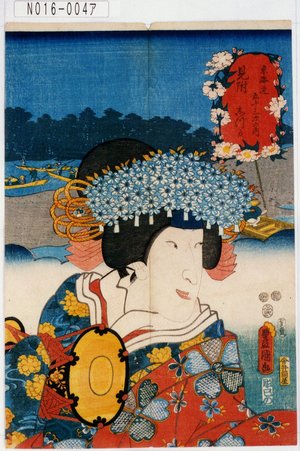
「東海道五十三次の内」「見附」「しづか」

Bando Shuka as Kuzunoha hime, Ichikawa Danjuro VIII as Abe no Yasuna and Ichikawa Kodanji IV as Yakko Yokanpei (Object)
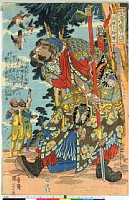
「通俗水滸伝豪傑百八人一個」 「金鎗手徐寧」
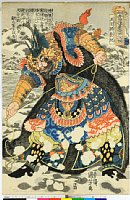
「通俗水滸伝豪傑百八人一個」 「天目将彭☆(王偏+已)」
Two West Side Wrestlers, Mikuniyama Hyodayu and Edogasaki Genji
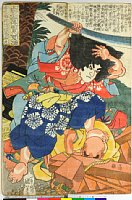
Honchou suikoden gouyuu happyakunin no hitori
.jpg)
「はかた小女郎 岩井杜若」
.jpg)
「やさすがたあづまのうつしゑ」

triptych print
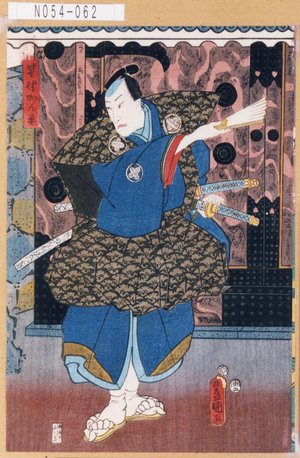
「早野かん平」
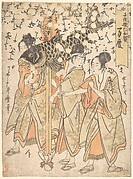
「子供遊仁和賀」 「万度」
Mando
Träsnitt, Bildkonst, Print, Woodcut, Woodblock

print; surimono

Courtesans with Kamuro

A Chinese Hero (descriptive title), series Heroes of the Popular History of the Three Kingdoms
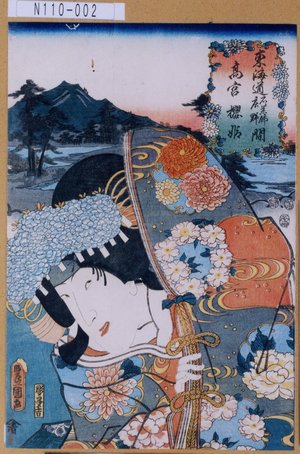
「東海道石薬師庄野間」 「高宮 桜姫」
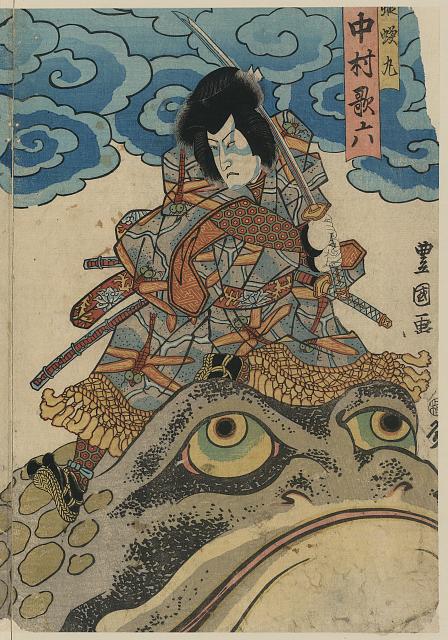
「蝦蟇丸」「中村歌六」
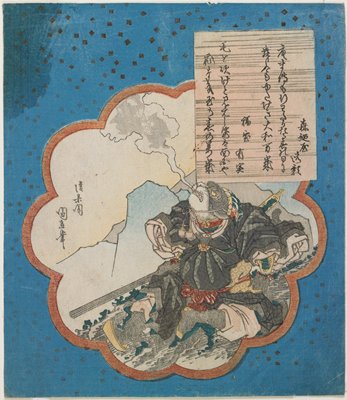
Sun Wukong Exhaling Manzai Performers
![[Aller prier dans un sanctuaire d'Inari] : [estampe] / [Shunchō a peint]](https://api.europeana.eu/thumbnail/v2/url.json?uri=https%3A%2F%2Fgallica.bnf.fr%2Fiiif%2Fark%3A%2F12148%2Fbtv1b10526489k%2Ff1%2Ffull%2F512%2C%2F0%2Fnative.jpg&type=IMAGE)
[Aller prier dans un sanctuaire d'Inari] : [estampe] / [Shunchō a peint]
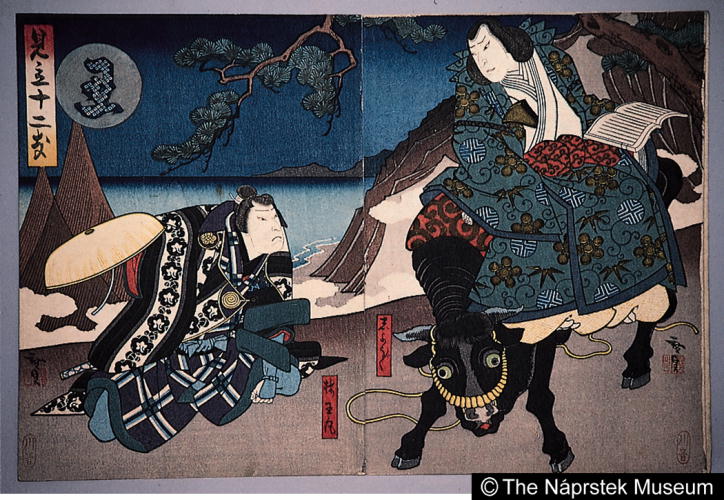
Mitate juunishi Ox
.jpg)
「悉達太子」
Last Updated:
Uploaded: 2021-07-21