
Courtesans Drawn in Osaka style (right), Kyoto style (center), and Edo style (left), from "Courtesans of the Three Capitals: A Set of Three (Sanga no tsu keisei sanpukutsui)"

- People
- Time
- Owner Organization

Courtesans Drawn in Osaka Style (Osaka kakiwake), from "Courtesans of the Three Capitals - A Set of Three (Sanga no tsu keisei sanpukutsui)"

Beauties of the Three Capitals: Edo (right), Kyoto (center), and Osaka (left)

High-Ranking Courtesans of the Three Capitals - A Set of Three (Santo tayu sanpukutsui)

Beauties of the Three Capitals: Shimabara in Kyoto (right), Yoshiwara in Edo (center), and Shinmachi in Osaka (left)

The Actors Sanogawa Ichimatsu (right), Nakamura Tomijuro (center), and Nakamura Kumetaro (left), from A Comparison - Set of Three (Nazorae Sanpukutsui)

Courtesan of Osaka and Her Attendant, left sheet of a triptych of beauties of the three capitals (Sanpukutsui Osaka hidari)

The Actors Onoe Kikugoro I (right), Sanogawa Ichimatsu I (center), and Sanogowa Senzo (left), from the triptych "Negura sanpukutsui"

In the Style of a Young Man (Wakashu fu), Left Sheet of Triptych (Sanpukutsui hidari)

The Autumn Shower, from "Sharing an Umbrella: A Set of Three (Aigasa sanpukutsui)"

Ono no Komachi, from A Set of Three Beauties (Bijin sanpukutsui)

Ogino Isaburo, from "A Triptych of Young Kabuki Actors: Kyoto, Center (Iroko sanpukutsui: Kyo, naka)"

Sanjo Kantaro, from "A Triptych of Young Kabuki Actors: Edo, Right (Iroko sanpukutsui: Edo, migi)"

Peddler of Flowers of the Four Seasons - A Set of Three (Shiki no hanauri sanpukutsui)

Peddler of Flowers of the Four Seasons - A Set of Three (Shiki no hanauri sanpukutsui)

Poem by Fujiwara no Teika, from the series "Yoshiwara Courtesans in the Three Evenings (Yoshiwara keisei sanseki)"
Actor Arashi Wakano as Aburaya Osome, from the series A Comparison of Three Beauties (Musume Sanpukutsui)

Arashi Tomisaburō as the Heavenly Maiden of Itsukushima (right); Arashi Kitsusaburō (II) as Ōuchi Samanosuke (center); and Bandō Jutarō (I) as Naruto Kōbei (left)

Arashi Rikaku II as Utsuke no Sanshirō (right panel); Ichikawa Takijūro as Daikyōji Ishun, and Kamju Saidayū as Fujiwara Koito (center panel); Arashi Rikan III as Zubora no Denkicki (left panel)

Three Komuso Monks: The Actors Ichikawa Ebizo (Danjuro V) as Kudo Suketsune (right), Ichikawa Monnosuke II as Soga no Juro Sukenari (center), and Ichikawa Omezo I as Soga no Goro Tokimune (left), in Act Six of the Play Waka Murasaki Edokko Soga (Pale Purple Soga, Edo Style), Performed at the Ichimura Theater from the Twenty-third Day of the First Month, 1792

The Actors Nakajima Mihoemon II as Fujiwara no Shihei, Minister of the Left (center, in the carriage), Ichikawa Ebizo III as Matsuo-maru (center, kneeling on the ground), Ichikawa Yaozo II as Sakura-maru (right), and Ichimura Uzaemon IX as Umeo-maru (left), in the "Carriage Stopping" (Kuruma-biki) Scene from the Play Sugawara Denju Tenarai Kagami (Sugawara's Secrets of Calligraphy), Performed at the Ichimura Theater from the Sixteenth Day of the Seventh Month, 1776

The Actors Ichikawa Yaozo II as Yoshimine no Munesada (right), Yoshizawa Sakinosuke III as Shizuya (center), and Nakamura Matsue I as Sakuragi (left), in the Play Kuni no Hana Ono no Itsumoji, Performed at the Nakamura Theater in the Eleventh Month, 1771

The Actors Nakajima Mihoemon II as Aramaki Mimishiro (right), Matsumoto Koshiro II as Otomo no Yamanushi (center), and Ichikawa Danzo III as Hannya no Goro (left), in the Play Kuni no Hana Ono no Itsumoji, Performed at the Nakamura Theater in the Eleventh Month, 1771

The Actors Yamashita Yaozo I as Ono no Komachi (right), Matsumoto Koshiro II as Godai Saburo (center), and Ichikawa Danzo III as Otomo no Kuronushi (left), in the play "Kuni no Hana Ono no Itsumoji," performed at the Nakamura Theater in the eleventh month, 1771

The Actors Otani Hiroji III as Yokambei (right), Nakamura Tomijuro I as Kuzunoha (center), and Bando Mitsugoro I as Yakambei (left), in the Last Scene from the Play Shinodazuma (The Wife from Shinoda Forest), Performed as a Supplement to the Play Kikyo-zome Onna Urakata (Female Diviner in Deep Violet), at the Morita Theater from the Ninth Day of the Ninth Month, 1776

「三ヶ津傾城三幅対」 「左 大坂かきはけ」「中 京書分」「右 江戸書分」
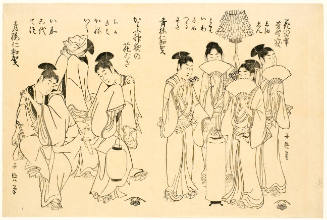
Green House Beauties Dancing & Singing at the Niwaka Festival
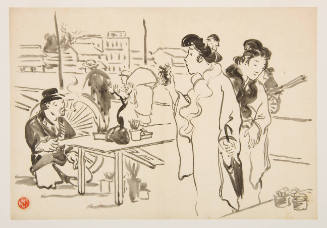
Women and Plant Vendor
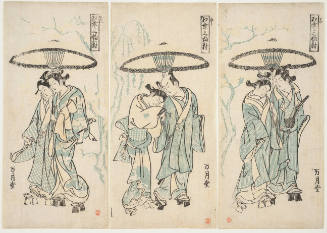
Aigasa Sampukutsui (Two Under One Umbrella: a Triptych)
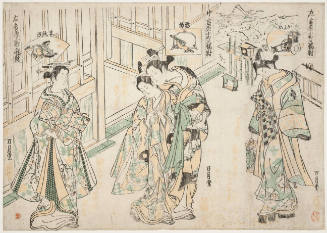
Komachi in the Yoshiwara: A Triptych

Parody of Narihira's Journey to the East (Azuma Kudari)
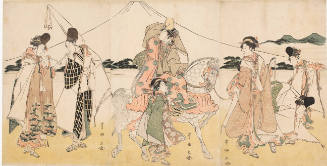
Parody of Narihira's Journey to the East (Azuma Kudai)

Parody of Narihira's Journey to the East (Azuma Kudari)
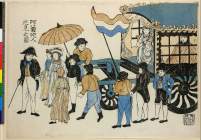
「阿蘭陀人巡見之図」
The Actors Yamashita Yaozo I as Ono no Komachi (right), Matsumoto Koshiro II as Godai Saburo (center), and Ichikawa Danzo III as Otomo no Kuronushi (left), in the play "Kuni no Hana Ono no Itsumoji," performed at the Nakamura Theater in the eleventh month, 1771
Träsnitt, Bildkonst, Woodblock, Print, Woodcut
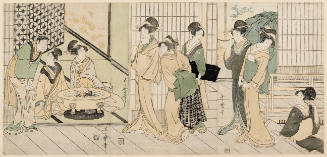
Women of the Pleasure Quarters (Seirō no onna tachi)
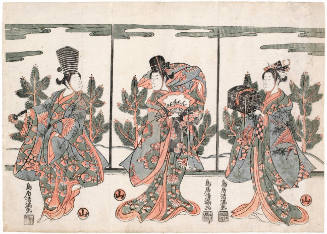
Nō Dancers

Orandajin junken no zu (Object)
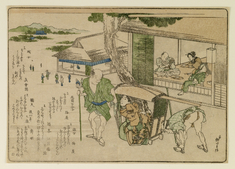
Genre Scene with Palanquin
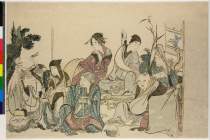
-

Battledore and shuttlecock

Enjoying the Evening Cool at Ryogoku - A Set of Three (Ryogoku suzumi sanpukutsui)
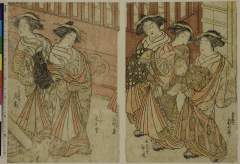
Wakamatsuya kikunoi、maruebiya hatsusaki、shinkanaya ayagiku、kasugano、wakamatsuya motomaki

Ehon toutoshoukeiichiranshinyoshiwarahassaku
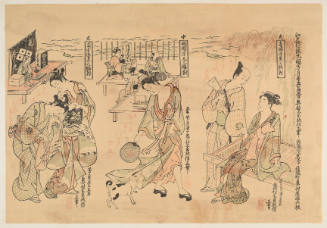
Modern reproduction of "Enjoying Evening Cool at Ryōgoku"

「両国涼見三幅対」
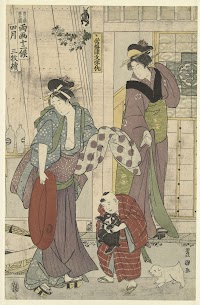
Visverkoper
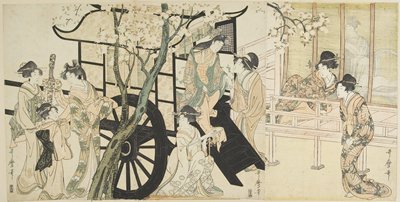
Lady Descending from a Court Carriage
Last Updated:
Uploaded: 2021-07-21