
The First Climber up the Genbu Gate at Pingyang (Heijō Genbumon heishi sento no zu)

- People
- Time
- Owner Organization

The Fall of Pingyang (Heijō kanraku no zu)

A Great Battle at Pingyang (Heijō daisensō no zu)

Great Victory at the Battle of Pingyang (Heijō gekisen daishōri no zu)
Harada Jūkichi was the First to Climb Up the Genbu Gate and Bravely Attack the Chinese Displaying Military Honor (Genbumon kōgeki zuiichi genkōsha Harada Jūkichi shi sentō funsen zu)
Harada Jūkichi was the First to Climb Up the Genbu Gate and Bravely Attack the Chinese Displaying Military Honor (Genbumon kōgeki zuiichi genkōsha Harada Jūkichi shi sentō funsen zu)
Harada Jūkichi was the First to Climb Up the Genbu Gate and Bravely Attack the Chinese Displaying Military Honor (Genbumon kōgeki zuiichi genkōsha Harada Jūkichi shi sentō funsen zu)

The Japanese Army's Victory at Pingyang (Heijō wagahei daishōri)
Triptych: Harada Jūkichi was the First to Climb Up the Genbu Gate and Bravely Attack the Chinese Displaying Military Honor (Genbumon kōgeki zuiichi genkōsha Harada Jūkichi shi sentō funsen zu)

The Most Meritorious Soldier in the Battle Against the Pingyang Gate, Harada Jukichi, Bravely Climbing the Wall (Genbumon kōgeki zuiichi gunkōsha Harada Jukichi shi sento funsenzu)

Japan's Great Victory at Pingyang (Nihon taishō Heijō gekisen no zu)

The Japanese Army Conquers Pingyang (Waga gun Heijō o otoshiireru no zu)

The Japanese Army's Great Victory at Pingyang (Nichi gun Heijō taishō no zu)

The Great Sino-Japanese War: Japan's Victory at Pingyang (Nisshin dai sensō no zu: Heijō no daishōri)

The Japanese Army Wins a Great Victory at Pingyang (Heijō gekisen waga gun daishōri no zu)

The Japanese Troops Win a Great Victory at Pingyang (Heijō daigekisen waga daishōri)

The infantryman Sawada Jvshichi climbing the Genbu Gate at Pyongyang

Attacking Pingyang, the Japanese Forces Employ an Electric Apparatus (Heijō kōgeki denki shiyō zu)

The Sino-Japanese Battle at Pingyang (Nisshin Heijō daigekisen no zu)

The Victorious Japanese Army Conquers Pingyang (Waga gun sensho Heijō ryakushu)

Private First-Class Harada Jūkichi, Climbing a Rampart, Opens a Pingyang Gate (Harada Jūkichi no yūkan Genbumon no jōheki o koete tekigun o haisu)

The Japanese Troops Assault the Chinese at Fort Pingyang (Waga gun Heijō no Seiei o osou)

The Japanese Army Defeats the Chinese Forces at Pingyang (Waga gun Heijō no Shinhei o gekiha suru zu)

On September 15, 1894, the Japanese Army Detachment Attacks Pingyang (Meiji nijū shichinen kugatsu jūgonichi Genzan shitai Heijō kōgeki no zu)

Our Army's Power Frightens the Chinese Soldiers at Pingyang (Heijō shinpatsu waga guni Shinhei kyōfu no zu)

A Skirmish at Seoul (Chōsen Keijō no shōsen)

A Skirmish at Seoul, Korea (Chōsen Keijō no shosen)
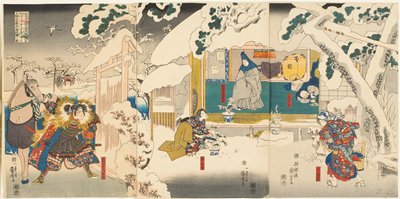
Scene from the Hachinoki Story
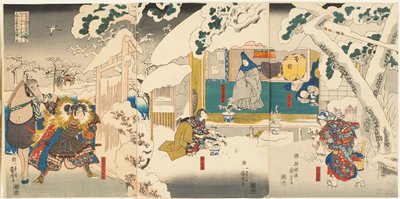
Scene from the Hachinoki Story
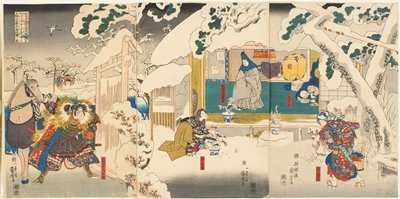
Scene from the Hachinoki Story
Träsnitt, Bildkonst, Woodcut, Woodblock, Print

China War Scenes, Various Artists (Album)

China War Scenes, Various Artists (Album)

紙本著色平治物語絵詞〈/(六波羅行幸巻)〉

「四季の詠」
Private First-Class Harada Jūkichi, Climbing a Rampart, Opens a Pingyang Gate (Harada Jūkichi no yūkan Genbumon no jōheki o koete tekigun o haisu)

The Country of America (People Watching Hot Air Balloons)

Imperial Forces Attacking the Rebel Troops at Kagoshima
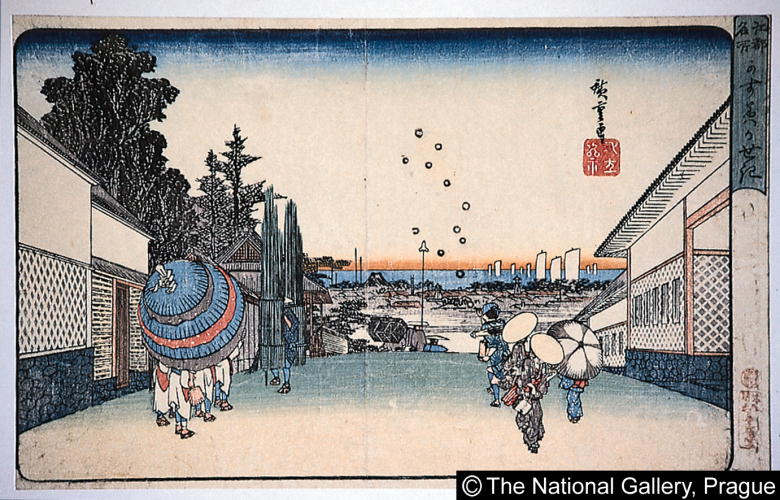
Edo meisho Kasumigaseki

Poem by Fujiwara Michinobu Ason

Miya: Festival of the Atsuta Shrine (Miya; Atsuta shinji), No. 42 from the series Fifty-Three Stations of the Tokaido (Tōkaidō gojūsan tsugi)

A Mixed Detached Force of Japan Occupies the Pescadores (Waga konosei shitai Bōkotō senryō no zu)
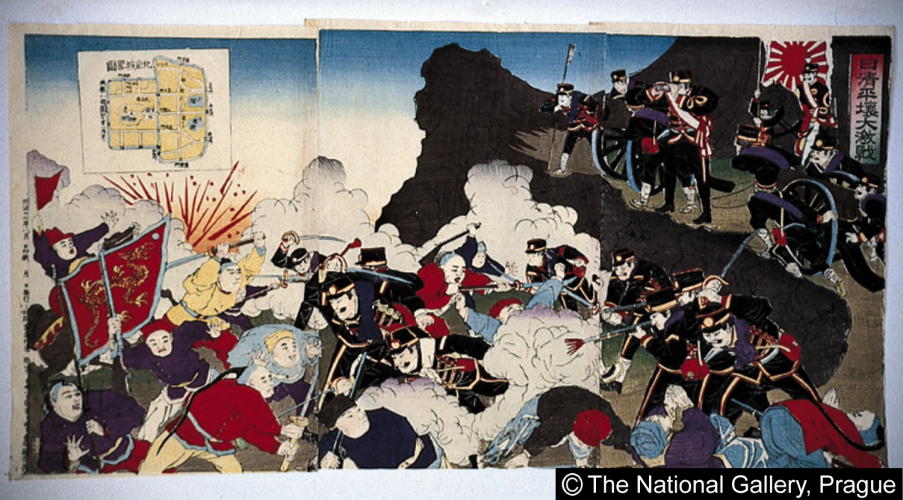
Sino-Japanese Battle at Pyongyang
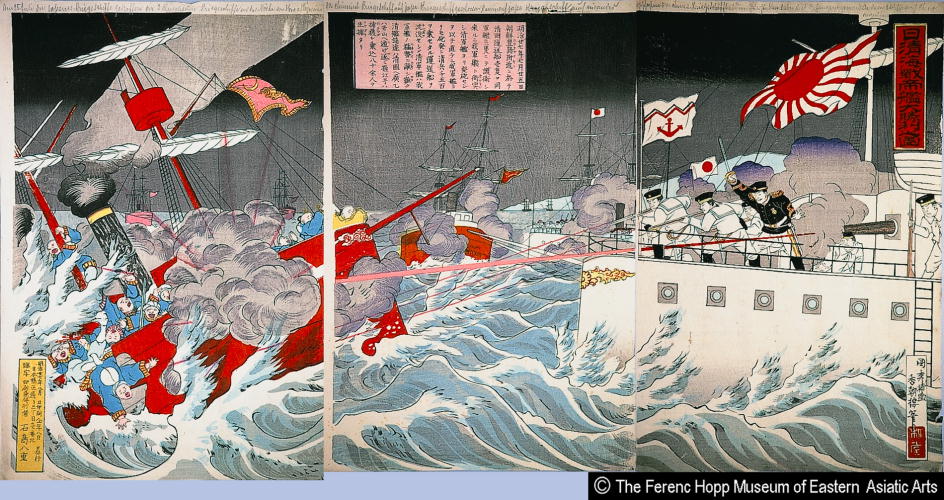
Great Victory of Imperial Forces in Sea Battle during the Sino-Japanese War
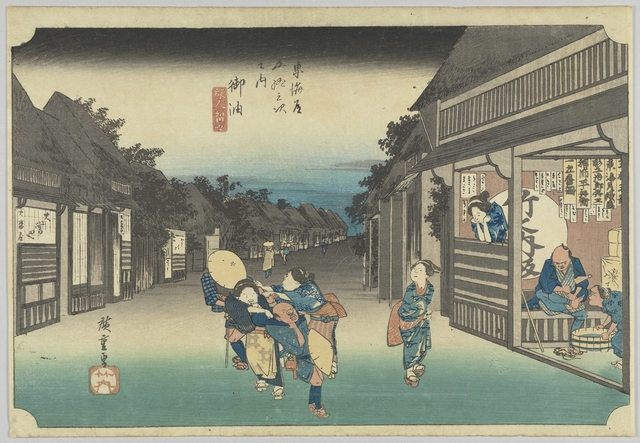
The Fifty-Three Post-Stations along the Tokaido Highway : Goyu
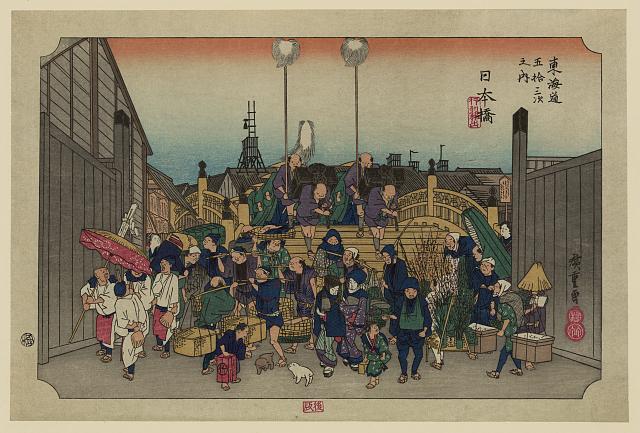
「東海道五拾三次之内」「日本橋」
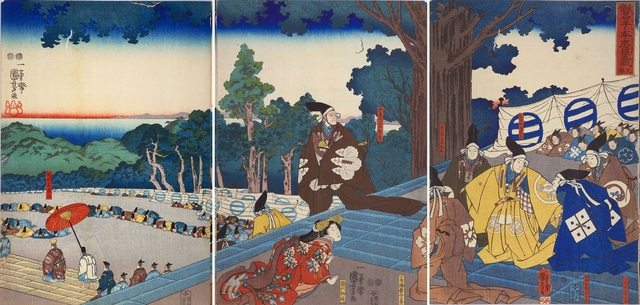
Scene from the Play "Kanadehon Chushingura" : Opening Act ( Triptych )
Great Victory at the Battle of Pingyang (Heijō gekisen daishōri no zu)
Uploaded: 2022-09-27