![[Humorous pictures showing damaged Chinese battleships receiving first aid and Chinese men running with sails (as from Chinese junks) on their backs and carrying rifles]](https://tile.loc.gov/storage-services/service/pnp/jpd/00900/00972_150px.jpg)
[Humorous pictures showing damaged Chinese battleships receiving first aid and Chinese men running with sails (as from Chinese junks) on their backs and carrying rifles]

- People
- Time
- Owner Organization
![[Humorous pictures showing various Chinese clothing and grooming habits]](https://tile.loc.gov/storage-services/service/pnp/jpd/00900/00973_150px.jpg)
[Humorous pictures showing various Chinese clothing and grooming habits]
![[Japanese sailor with rifle holding three Chinese battleships at bay]](https://tile.loc.gov/storage-services/service/pnp/jpd/00900/00977_150px.jpg)
[Japanese sailor with rifle holding three Chinese battleships at bay]
![[Humorous picture showing Chinese religious practices (Raijin, the Japanese God of Thunder, ranting to a crowd of Chinese Buddhist worshippers)]](https://tile.loc.gov/storage-services/service/pnp/jpd/00900/00985_150px.jpg)
[Humorous picture showing Chinese religious practices (Raijin, the Japanese God of Thunder, ranting to a crowd of Chinese Buddhist worshippers)]
![[Humorous pictures showing the Chinese mode of transportation (four men harnessed to a carriage by their long pigtails) and a scene depicting the silk industry]](https://tile.loc.gov/storage-services/service/pnp/jpd/00900/00974_150px.jpg)
[Humorous pictures showing the Chinese mode of transportation (four men harnessed to a carriage by their long pigtails) and a scene depicting the silk industry]
Italian women with rifles and captured German stick grenades at Massa Lombarda, Italy, during World War II
![[Humorous pictures showing Chinese religious practices (may include Raijin, the Japanese God of Thunder, seated in front in bottom cartoon)]](https://tile.loc.gov/storage-services/service/pnp/jpd/00900/00975_150px.jpg)
[Humorous pictures showing Chinese religious practices (may include Raijin, the Japanese God of Thunder, seated in front in bottom cartoon)]
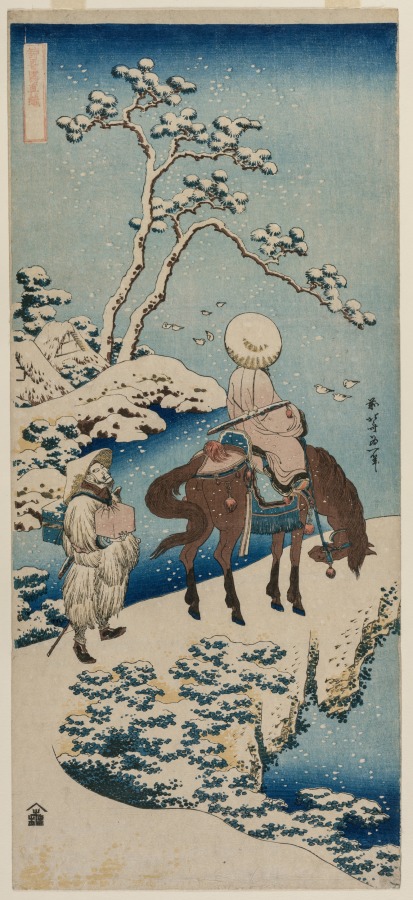
Chinese Official Pausing on a Bridge to View the Snow (from the series A True Mirror of Chinese and Japanese Verse)
An armoured train used to protect Chinese troops and supplies from Japanese attacks. Steel walls and revolvi...
Sport' and General" PKoto. Boom of boats built by the Chinese across the Yanglze-kiang.River, and,set-on fir...
![[Kuropatkin on his knees amid ruined battleships appealing to Saint Andrew, the patron saint of Russia, who is holding a large sword and shield]](https://tile.loc.gov/storage-services/service/pnp/jpd/00900/00949_150px.jpg)
[Kuropatkin on his knees amid ruined battleships appealing to Saint Andrew, the patron saint of Russia, who is holding a large sword and shield]
Buddhist Rakkan (Chinese, Luohan) Seated on a Rock Under an Old Pine Tree and Accompanied by a Tiger (after a famous scroll by the Chinese painter Li Gonglin [also known as Li Longmian; c. 1040-1106])
Parody of the Nō Play Hakurakuten (Two Figures Standing in Boats: Chinese Scholar Holding an Ink Orchid Painting and Japanese Girl Holding a Harunobu Bijin Pillar Print Scroll)

Banzai for the Japanese Empire: The Japanese Forces Defeat the Chinese Troops at Songhwan and Asan, Korea (Teikoku banzai: Nihonhei Chōsen Seikan oyobi Gazan ni Shinahei o gekitai no zu)

Banzai for the Japanese Empire: The Japanese Forces Defeat the Chinese Troops at Songhwan and Asan, Korea (Teikoku banzai: Nihonhei Chōsen Seikan oyobi Gazan ni Shinahei o gekitai no zu)

Banzai for the Japanese Empire: The Japanese Forces Defeat the Chinese Troops at Songhwan and Asan, Korea (Teikoku banzai: Nihonhei Chōsen Seikan oyobi Gazan ni Shinahei o gekitai no zu)

Attack made by the forts at Jih island and the south-eastern head of Liukung island and the Chinese men-of-war upon the already captured Lukeutsuy forts on the E. coast of Wei-Hai-Wei, and the Japanese army on land
![[Chinese Emperor(?) and Empress(?) seated on raised platform with musicians seated in front of them; the Emperor appears to have lost his nose and part of his right shoulder, the Empress part of her scalp]](https://tile.loc.gov/storage-services/service/pnp/jpd/00900/00980_150px.jpg)
[Chinese Emperor(?) and Empress(?) seated on raised platform with musicians seated in front of them; the Emperor appears to have lost his nose and part of his right shoulder, the Empress part of her scalp]
Harada Jūkichi was the First to Climb Up the Genbu Gate and Bravely Attack the Chinese Displaying Military Honor (Genbumon kōgeki zuiichi genkōsha Harada Jūkichi shi sentō funsen zu)
Harada Jūkichi was the First to Climb Up the Genbu Gate and Bravely Attack the Chinese Displaying Military Honor (Genbumon kōgeki zuiichi genkōsha Harada Jūkichi shi sentō funsen zu)
Harada Jūkichi was the First to Climb Up the Genbu Gate and Bravely Attack the Chinese Displaying Military Honor (Genbumon kōgeki zuiichi genkōsha Harada Jūkichi shi sentō funsen zu)

No. 2: Chinese boys copying paintings and writing Japanese, from the series "Children Say 'This is Japan!' and Imitate the Games They See in Picturebooks (Yodo iu koitsu wa Nippon, ezoshi o mite yori sono gai ni asobu)"
Triptych: Harada Jūkichi was the First to Climb Up the Genbu Gate and Bravely Attack the Chinese Displaying Military Honor (Genbumon kōgeki zuiichi genkōsha Harada Jūkichi shi sentō funsen zu)

The Actors Sawamura Sojuro II as the Chinese Sage Huangshi Gong (on horseback), and Ichikawa Danzo III as the Chinese Warrior Zhang Liang (mounted on a dragon), in the Finale of the Play Otokoyama Yunzei Kurabe (At Mt. Otoko, a Trial of Strength in Drawing the Bow), Performed at the Ichimura Theater from the First Day of the Eleventh Month, 1768

No. 4: Chinese boys playing a raffle game, from the series "Children Say 'This is Japan!' and Imitate the Games They See in Picturebooks (Yodo iu koitsu wa Nippon, ezoshi o mite yori sono gai ni asobu)"
「木蓮に文鳥」
「江戸の花」 「一流曲独楽」「竹沢藤次」「忰竹沢万次」」
-
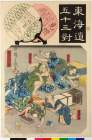
「東海道五十三対」 「見附」「膝栗毛滑稽」「喜多八」「十吉」「弥二郎兵衛」
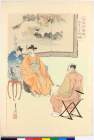
「日本花図絵」 「桜花問答 稲宣義 唐使」
[Humorous pictures showing various Chinese clothing and grooming habits]
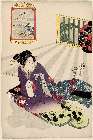
「(雪月花」 「月」「あふみや紋彦)」
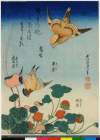
「鵙」「翠雀」「蛇苺」「虎耳草」
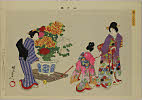
「江戸錦」 「献上のきく」
![[Kuropatkin(?) as town crier]](https://tile.loc.gov/storage-services/service/pnp/jpd/00900/00947_150px.jpg)
[Kuropatkin(?) as town crier]
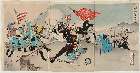
「日清両軍蓋平大激戦之図」

Kumonryuushishin、onkou
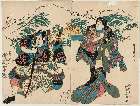
「のりつね妹飛鳥」

「木村重成」
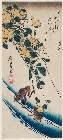
「山吹に蛙」
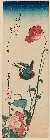
「芥子に小鳥」
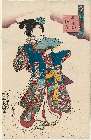
「風流見たて七小町 清水」
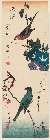
「朝顔に百舌鳥(もず)/紅葉に瑠璃カケス(るりかけす)(?)」
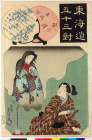
「東海道五十三対」 「宮の駅」「●魂塚」
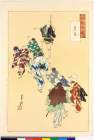
Gekkouzuihitsu
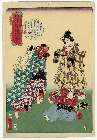
「釈迦八相記今様写絵」 「九」
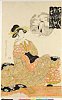
「七間人」 「たまや たかそて」
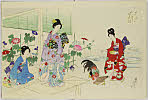
「十二ひと絵」 「風待月の朝がほ」
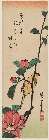
「(椿に小鳥)」
Last Updated:
Uploaded: 2021-09-20