Attack by American Indians: Act II, Scene 1 from the play Strange Tale of the Castaways: A Western Kabuki (Hyōryū kidan seiyō kabuki)

- People
- Time
- Owner Organization
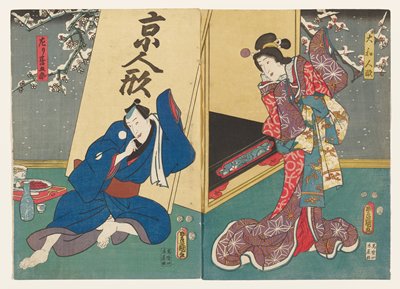
Scene from the Kabuki Play "Kyō ningyō"

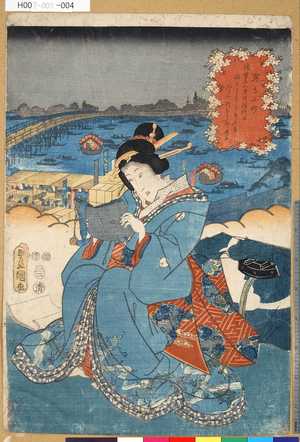
Mitate (parody) on the letter-reading scene from act 7 of the Kabuki play Chushingura

Scene from the famous Kabuki Play, "Sukeroku"
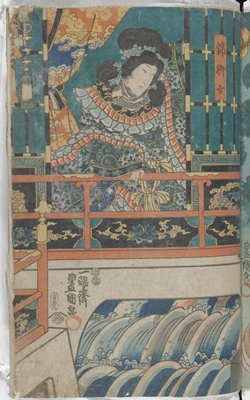
Scene with Kinshōjo from the Kabuki Play "Kakusenya Kassen"
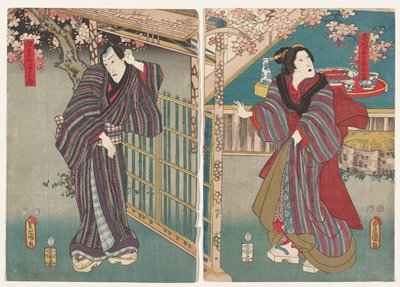
Scene from the Kabuki Play, "Yowa nasake ukina no yokogushi"

(Scene from the Kabuki Play "Dan no ura kabuto gunki")
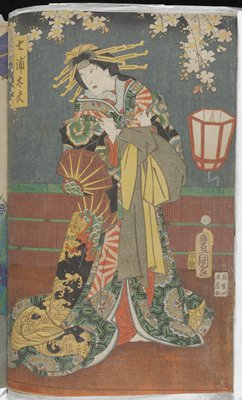
(Scene from the Kabuki Play "Saninin Kichiza kuruwa no hatsugai")
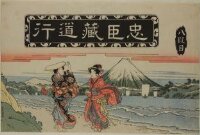
Act VIII, the Michjiyuki travel dance, from a series of prints illustrating the Kabuki play Chushingura
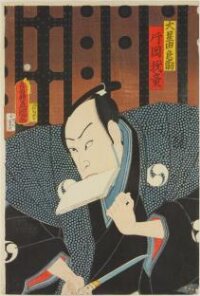
The actor Kataoka Gado as Oboshi Yuranosuke in Act IV of the Kabuki play Chushingura performed

ANTI-AIRCRAFT FIRE FROM AMERICAN SHIPS PEPPERS THE SKY OFF GUADALCANAR ISLAND AS JAPANESE BOMBERS ATTACK
Scene of devastation in the town of Cassino when it fell to the Allied attack, Italy, World War II - Photogr...
Attack at Kō no Moronao's House/ Act 11 (Jūichi dan me), from the series The Treasury of Loyal Retainers (Kanadehon chūshingura)
A. Japanese supply ship on fire in the Bay of Bengal, near Racoon, whilst under attack by American bombers. ...
Smoke and dust from a German air attack in the Western Desert, World War II - Photograph taken by G H Levien
A scene of desolation in Cassino on the day it fell to Allied attack, Italy, World War II - Photograph taken...
A Japanese ferry-boat reduced to a smoking ruin after attack by American 3rd Fleet carrier aircraft in the s...

The Actor Nakamura Sukegoro II as Kaminari Shokuro in the Joruri "Gonin Otoko" (Five Chivalrous Commoners), Played as One Act in the Ayatsuri Kabuki Ogi (Mastery of the Fan in Kabuki), Performed at the Nakamura Theater from the Twentieth Day of the Seventh Month, 1768

The Actor Nakamura Noshio II as Tonase, in the Bridal Journey Scene, Act Eight of the Play Kanadehon Chushingura (Model for Kana Calligraphy: Treasury of the Forty-seven Royal Retainers), Performed at the Miyako Theater from the Fifth Day of the Fourth Month, 1795

The Actors Ichikawa Monnosuke II and Segawa Kikunojo III as the Lovers Seijuro (right) and Onatsu (left), in the Elopement Scene "Michiyuki Hiyoku no Kiku-cho" (An Elopemet: Chrysanthemum-and-Butterfly Lovebirds), a Dance Interlude from Part Two of the Play Kabuki no Hana Bandai Soga (Flower of Kabuki: The Eternal Soga), Performed at the Ichimura Theater from the Twenty-fifth Day of the Fourth Month, 1781

The Actors Matsumoto Koshiro IV and Segawa Kikunojo III as the Lovers Choemon (right) and Ohan (left), in the Elopement Scene "Michiyuki Segawa no Adanami" (An Elopement: Treacherous Waves in the Shallow River), a Dance Interlude from Part Two of the Play Kabuki no Hana Bandai Soga (Flower of Kabuki: The Eternal Soga), Performed at the Ichimura Theater from the Twenty-fifth Day of the Fourth Month, 1781

The Actors Arashi Sangoro II as Minamoto no Yoritomo Disguised as the Hat Maker (Ebosi Ori) Daitaro, and Segawa Kikunojo II as the Snow Woman (Yuki Onna), in the Dance Sequence "Oyama Beni Yuki no Sugao" (Courtesan's Rouge on a Snow White Face), from the Final Act of the Play Myotogiku Izu no Kisewata (Cotton Wadding of Izu Protecting the Matrimonial Chrysanthemums), Performed at the Ichimura Theater from the First Day of the Eleventh Month, 1770

The Actors Nakamura Nakazo I as Hata Rokurozaemon Disguised as the Samurai's Manservant (Yakko) Igaguri Hanehei (left), and Nakamura Noshio I as the Lady-in-Waiting Koto no Naishi (right), in the Dance Sequence "Sodegasa Momiji no Tekuda" (Umbrella Sleeves: Coquettish Tricks at Maple Time), from the Fourth Act of the Play Hikitsurete Yagoe Taiheiki (The War Tale Taiheiki: With Din and Clamor of Battle), Performed at the Morita Theater in the Eleventh Month, 1776

Three Komuso Monks: The Actors Ichikawa Ebizo (Danjuro V) as Kudo Suketsune (right), Ichikawa Monnosuke II as Soga no Juro Sukenari (center), and Ichikawa Omezo I as Soga no Goro Tokimune (left), in Act Six of the Play Waka Murasaki Edokko Soga (Pale Purple Soga, Edo Style), Performed at the Ichimura Theater from the Twenty-third Day of the First Month, 1792
[Festival religioso de flores [Material gráfico] : Sono yukari hana no sairei]
Träsnitt, Bildkonst, Print, Woodcut, Woodblock

Tametomo wa rodoamata meshitsure (Object)

Nunohiki no taki akugen daita nanpa (Object)
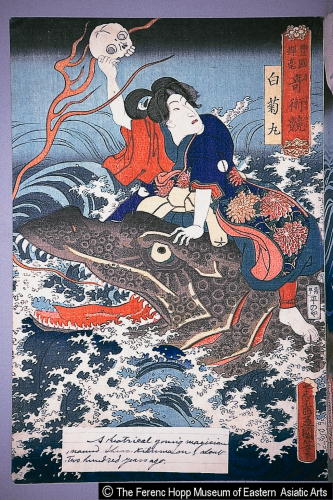
Toyokuni kigoo kijutsu kurabe Shiragikumaru
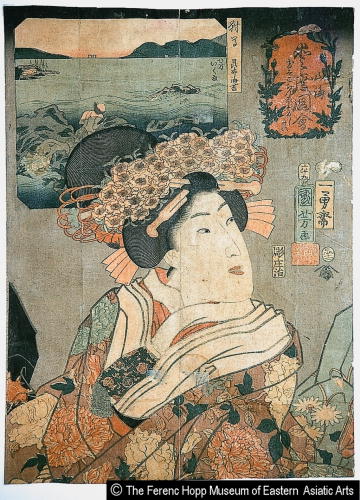
Sankai medetai zue Sixty-nine : I want to go look at flowers/Seaweed from Tsushima
「関寺小町」

Minamoto no Yorimitsu no Shitenno tsuchi-gumo taiji no zu (Object)
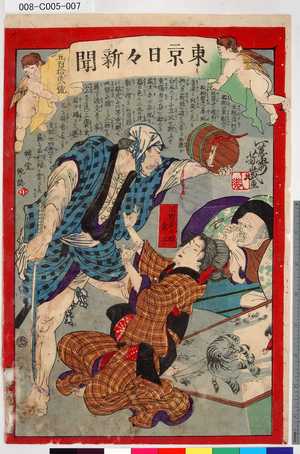
「東京日々新聞」「五百拾貳號」「沼野直七娘倉子」

Meiyo sanjurokassen (Series)

Tsuzoku Suikoden Goketsu Hyakuhachi-nin no Hitori (Series)

Seichuu ooboshi ichidai banashi Eight
Träsnitt, Bildkonst, Woodblock, Woodcut, Print

Kan U ga gishin Soso wo yurusu zu (Object); Tsuzoku Sangokushi no uchi (Series)
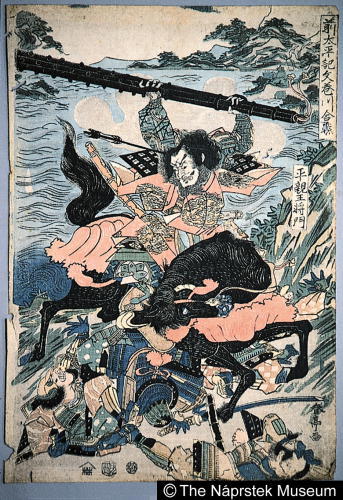
The Battle at Fumimakigawa in the Taiheiki
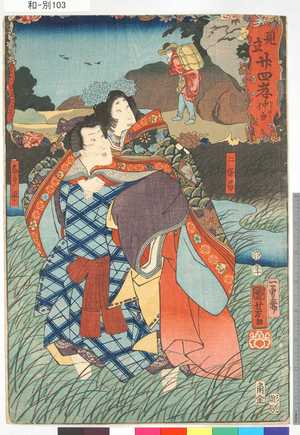
「見立廿四孝 仲由」「二條局」「なり平」
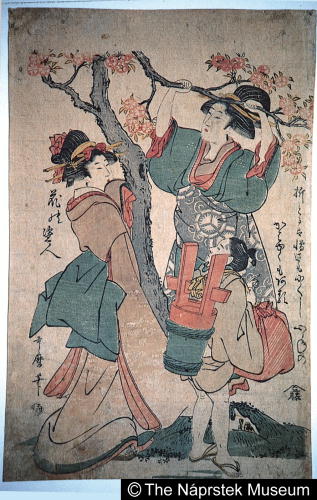
Stealing Flowers

Omori Hikoshichi (Object)
![[Danjo aishoo] Woman/Fire-Man/Water: A Good Combination](http://lapis.nichibun.ac.jp/image?did=8&pic=1&fid=G130334402.jpg)
[Danjo aishoo] Woman/Fire-Man/Water: A Good Combination

Samegai: Kanai Tanigorō, series Sixty Nine Stations of the Kiso Road
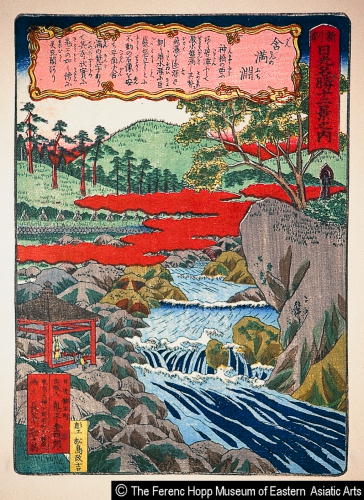
Shinkoku Nikkoo meishoo juunikei no uchi Ganman no fuchi
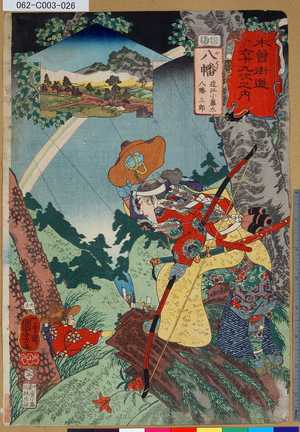
「木曾街道六十九次之内」「廿五」「八幡 近江小藤太 八幡三郎」

Minamoto no Yorimitsu-ko no yakata ni tsuchigumo yokai o nasu zu (Object)
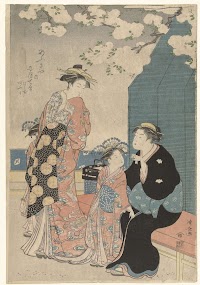
Courtesan with two attendants under cherryblossom
Last Updated:
Uploaded: 2021-07-21