Attacking Pyongyang: The Japanese Army Forged through the Enemy Stronghold (Heijō Kōgeki waga gun tekiruio nuku)

- People
- Time
- Owner Organization
Attacking Pyongyang: The Japanese Army Forged through the Enemy Stronghold (Heijō Kōgeki waga gun tekiruio nuku)
Attacking Pyongyang: The Japanese Army Forged through the Enemy Stronghold (Heijō Kōgeki waga gun tekiruio nuku)
Attacking Pyongyang, Our Soldiers Conquer the Enemy Fortress (Heijō kōgeki waga gun tekirui o nuku)

Attacking Pingang: Our Soldiers Conquer the Enemy Fortress (Heijō kōgeki waga gun tekirui o nuku)
Braving the Snow, Our Troops Capture the Stronghold at Weihaiwei (Yuki o okashite, waga gun Ikaiei no kenrui o nuku zu)

The Japanese Army Conquers Pingyang (Waga gun Heijō o otoshiireru no zu)

The Japanese Army Assaults Newchang (Waga gun Nyuchanjō kōgeki no zu)

The Japanese Troops Assault the Chinese Fort at Pingyang (Waga gun Heijō no seiei o osou)

Attacking Pingyang, the Japanese Forces Employ an Electric Apparatus (Heijō kōgeki denki shiyō zu)

The Victorious Japanese Army Conquers Pingyang (Waga gun sensho Heijō ryakushu)

The Japanese Troops Assault the Chinese at Fort Pingyang (Waga gun Heijō no Seiei o osou)

The Japanese Army Defeats the Chinese Forces at Pingyang (Waga gun Heijō no Shinhei o gekiha suru zu)

The Japanese Army Wins a Great Victory at Pingyang (Heijō gekisen waga gun daishōri no zu)

Great Victory of Our Forces at the Battle of Pyongyang (Heijo gekisen waga gun taisho no zu)

The Japanese Army Occupies the Kiuliencheng Fortress (Waga gun daishōri Kyurenjō senryō)

The Right-Wing Forces of the Japanese Second Army, Braving Enemy Fire, Wade Chinchou Bay and Attack the Enemy Fort (Waga dai ni gun no uyoku hōka o okashite Kinshuwan o toshoshi tekirui o kogekisu)

Crossing Taiedong River, Our Army Assaults the Enemy Headquarters (Waga rikugun Daidōkō o watari Shingun no honei o kōgekisu)

During the Second Army's Attack on Chinchou, Engineer Superior Private Onoguchi Tokuji Defying Death Blasts the Gate of the Enemy Fort (Dai nigun Kinshūjō kōgeki kōhei jōtōhei Onoguchi Tokuji shi banshi o okashite bakuyaku o sōchi shi jōmon o hakai...)

The Japanese Infantry Company Conquered the Fortress of Fenghuang-cheng. Before Fleeing, the Russians Blew Up Their Own Ammunition Dump. (Waga gun hohei no ichibutai o motte Hōōjō o senryōsu tekigun haisō ni oyonde mizukara danyakuku o yaku)

Japanese Cavalry Forces Drove the Enemy Away from Sandaitzu, While an Infantry Company Occupied Fenghuang-cheng; Japan's Great Victory (Waga kihei Sandaishi no teki o gekitai shi hōhei no ichibutai wa Hōōjō o senryōsu daishōri no zu)
Flight (Chinsen chihō no go-mei no Nihon-kōhei shin-hei hyaku-yo-nin o uchi shirizoku)
![名所江戸百景. [68], 浅草川大川端宮戸川 / 広重画Asakusagawa ōkawabata Miyatogawa / Hiroshige-ga](https://api.europeana.eu/thumbnail/v2/url.json?uri=https%3A%2F%2Fgallica.bnf.fr%2Fiiif%2Fark%3A%2F12148%2Fbtv1b105269775%2Ff1%2Ffull%2F512%2C%2F0%2Fnative.jpg&type=IMAGE)
名所江戸百景. [68], 浅草川大川端宮戸川 / 広重画Asakusagawa ōkawabata Miyatogawa / Hiroshige-ga
THIRTY-SIX VIEWS OF YEDO, "FUKAGAWA HACHIMAN"
.jpg)
「其四朝鮮電報実記」 「朝鮮電報実記」

Bijin Awase (Series)
.jpg)
「日本三景之内天の橋立」 「日本三景之内」「天の橋立(三枚続)」
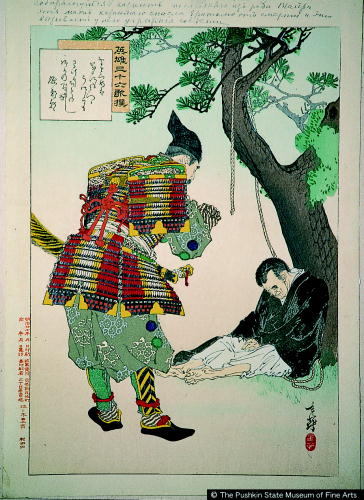
Eiyuu sanjuurokkasen
Foreigners Watching Ships Depart of California, published by Tsujiokaya Kamekichi

Bai Juyi (Japanese: Hakurakuten), from the series "A True Mirror of Japanese and Chinese Poems (Shiika shashin kyo)"
“The Youth Song” from the Series True Mirror of Chinese and Japanese Poems
Harada Jūkichi was the First to Climb Up the Genbu Gate and Bravely Attack the Chinese Displaying Military Honor (Genbumon kōgeki zuiichi genkōsha Harada Jūkichi shi sentō funsen zu)
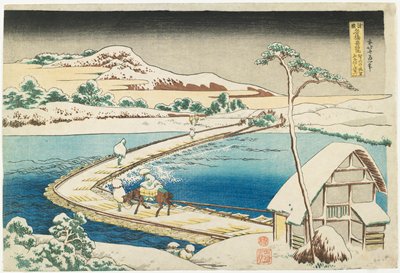
Old View of the Pontoon Bridge at Sano in Kōzuke Province
FAMOUS PLACES OF THE 53 STATIONS OF THE TOKAIDO, " ISHIYAKUSHI (STATION 45)
The Hundred Poets
Original Fuji, Meguro (Meguro Moto-Fuji), Number 25 from the series One Hundred Famous Views of Edo (Meisho Edo hyakkei)
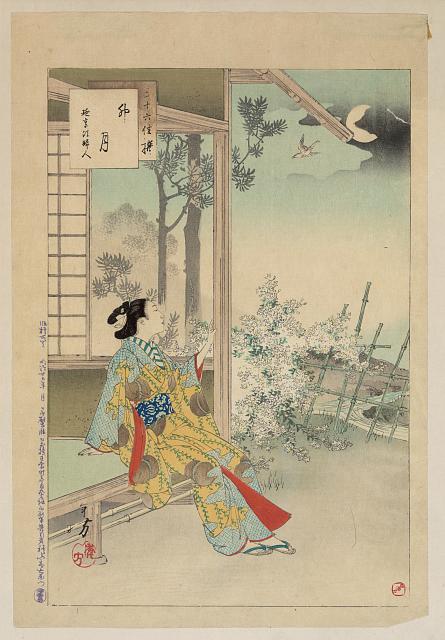
「三十六佳撰」 「卯月」「延享頃婦人」
TOKAIDO GOJU-SAN-TSUGI
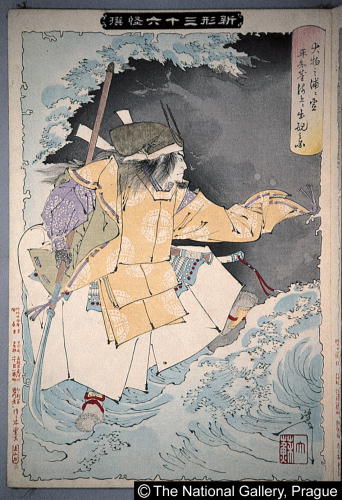
Shingata sanjuurokkaisen The Ghost of Taira no Tomomori Appearing at Daimotsu Bay


Kakinomoto no Hitomaro (no. 3) (Object); Hyakunin isshu no uchi (Series)

One Hundred Aspects of the Moon ( Tsuki Hyakushi )
![「(芳年漫画)」 「[茨木童子]」](http://lapis.nichibun.ac.jp/image?did=14&pic=0&fid=01520r.jpg)
「(芳年漫画)」 「[茨木童子]」

diptych print

Ōtsu: View of the Lake and the Town of Ōtsu from the Kannon Hall of Mii Temple (Ōtsu; Miidera Kannondō yori Ōtsu no machi kosui chōbō)
Last Updated:
Uploaded: 2021-07-21