Ema: Kanji-Text zu Kannon , über TIbet. Schrift-Flammensymbolen

- Time
- Owner Organization

Ema votive painting of a horse, dedicated to the Eleven-headed Kannon
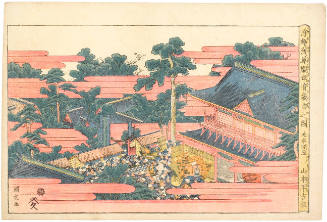
Floating World of the Asakusa Kannon Temple Year End Festival ichi no zu jihon tonya)
Illustrations of Demonic Figures and Chinese Kings with Text (Sankō gotei, Shoō no zu)
Courtesans Writing on Gaku as Offerings to the Temple Asakusa (Asakusa Kannon hōshoku-gaku no zu)
Courtesans Writing on Gaku as Offerings to the Temple Asakusa (Asakusa Kannon hōshoku-gaku no zu)
Courtesans Writing on Gaku as Offerings to the Temple Asakusa (Asakusa Kannon hōshoku-gaku no zu)
Section from a Buddhist Cosmology (Nihon koku narabini Shumi shoten zu) with text copied by Monk Ryūi
Triptych: Courtesans Writing on Gaku as Offerings to the Temple Asakusa (Asakusa Kannon hōshoku-gaku no zu)
Rubbing from a Stele Engraved with a Figure of the Bodhisattva Avalokitesvara (Kannon Bosatsu) Standing Amidst Clouds; design after the Chinese artist Wu Daozi (8th c.)
Ema: Fünf-jährige Dichterin? am Kirschbaum (Ema für Erfolg in der Schule/Uni oder bei Prüfungen
Ema: Wildschweingruppe
Ema: Darstellung des Glücksgottes Fukurokuju (福禄寿)
Ema: Hase mit Welle
Ema: Jäger
Ema: Schwein mit Frischling (weiß)
Ema: Dichterin Sagami 相模像
Ema: 3 Hundedarstellungen
Ema: Baby auf Hase
Ema: Pflaume und shin-Rind
Ema: Drache mit goldener Wolke und Kugel
Ema: Sitzporträt von Takeda Harunobu
Ema: Der Windgott 風神 Fûjin
Ema: Akabeko 赤べこ
Ema: Sitzender Sarugami 猿神
Ema: Ebisu und Daikoku-Motiv
Ema: Torrii und Inari
Ema: Rashômon no oni 羅生門の鬼
Ema: Hase mit Reisschüssel
Ema: Sitzender Glücksgott - 寿老人 Jurôjin

votive plaque; calligraphy
Ema: Spielzeug-Tiger
Ema: Krake als Buddha der Heilung Takoyakushi たこ薬師
Ema : Ôji Inari
Last Updated:
Uploaded: 2021-07-27