Deriving the Cartography of the Japanese Right Periphery: The Case of Sentence-Final Discourse Par...
- Time
- Owner Organization
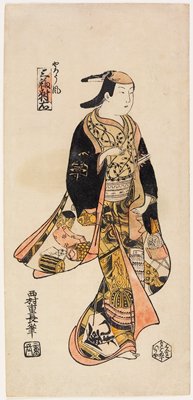
Right: In the Style of an Actor
Minneapolis Institute of Arts
Minneapolis Institute of Art API
![The Three Paradisiacal Isles [right of a pair]](https://www.gumtree.com/static/1/resources/assets/rwd/images/orphans/a37b37d99e7cef805f354d47.noimage_thumbnail.png)
The Three Paradisiacal Isles [right of a pair]
Minneapolis Institute of Arts
Minneapolis Institute of Art API
The transition from agricultural to industrial society: Japanese case
GESIS - Leibniz-Institut für Sozialwissenschaften. Bibliothek Köln
Europeana API
![Dragon [right of the pair Dragon and Tiger]](https://2.api.artsmia.org/3213.jpg)
Dragon [right of the pair Dragon and Tiger]
Minneapolis Institute of Arts
Minneapolis Institute of Art API
![Li Tieguai (left), Han Xiangzi (right) [center right of the set Daoist Immortals]](https://2.api.artsmia.org/18575.jpg)
Li Tieguai (left), Han Xiangzi (right) [center right of the set Daoist Immortals]
Minneapolis Institute of Arts
Minneapolis Institute of Art API
![Scenes from the Tales of Saigyō [right of a pair]](https://2.api.artsmia.org/122160.jpg)
Scenes from the Tales of Saigyō [right of a pair]
Minneapolis Institute of Arts
Minneapolis Institute of Art API
![Scenes from The Tale of Genji [right of a pair]](https://2.api.artsmia.org/122090.jpg)
Scenes from The Tale of Genji [right of a pair]
Minneapolis Institute of Arts
Minneapolis Institute of Art API
![Scenes from the Tale of Genji [right of a pair]](https://2.api.artsmia.org/118479.jpg)
Scenes from the Tale of Genji [right of a pair]
Minneapolis Institute of Arts
Minneapolis Institute of Art API
![The Battle of Ichinotani [right of a pair of Scenes from the Tale of the Heike]](https://2.api.artsmia.org/123455.jpg)
The Battle of Ichinotani [right of a pair of Scenes from the Tale of the Heike]
Minneapolis Institute of Arts
Minneapolis Institute of Art API
![The Battle of Ichinotani [right of a pair of Scenes from The Tale of the Heike]](https://2.api.artsmia.org/19590.jpg)
The Battle of Ichinotani [right of a pair of Scenes from The Tale of the Heike]
Minneapolis Institute of Arts
Minneapolis Institute of Art API

UPPER LEFT : A Japanese maiden in the children's procession. UPPER RIGHT : A general view of the procession ...
Auckland Libraries
DigitalNZ New Zealand API
Bust of a Woman, Head Inclined to the Right
Metropolitan Museum of Art
The Metropolitan Museum of Art Open Access CSV
![Spring and Summer [right of a pair of Landscapes of the Four Seasons]](https://2.api.artsmia.org/60174.jpg)
Spring and Summer [right of a pair of Landscapes of the Four Seasons]
Minneapolis Institute of Arts
Minneapolis Institute of Art API

Main Room, right, and the Second Room, left, of the Middle Shoin
Museum of Fine Arts, Houston
Museum of Fine Arts, Houston

On Japanese Art: A Discourse delivered at the Royal Institution of Great Britain, May 1, 1863 (Object)
British Museum
British Museum Collection
A FIGHT IN THE SEA: AN INCIDENT OF THE BATTLE OF NAN-SHAN. During the attack on Nan-shan, the Japanese right...
National Library of New Zealand
DigitalNZ New Zealand API
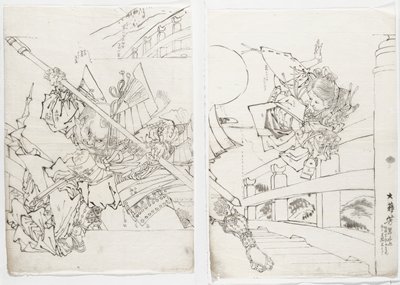
Preparatory drawing for the left and right sheets of Picture of the Gojō Bridge from the Chronicle of Yoshitsune
Minneapolis Institute of Arts
Minneapolis Institute of Art API
Commercial Culture, Political Culture & the Political Economy of Trade Policy: The Case of Japan
Stanford University Libraries
Stanford Libraries SearchWorks
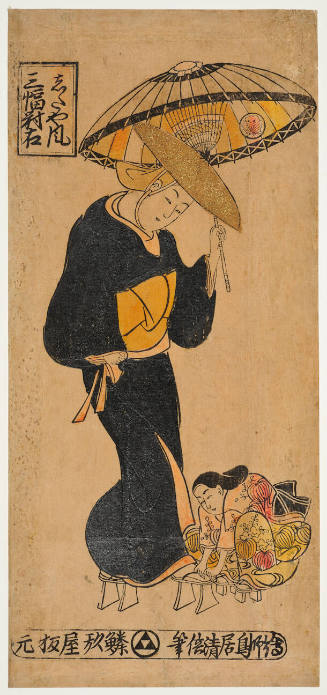
Shitaya Style, the right sheet of a triptych: The Actor Sanjō Kantarō
Honolulu Museum of Art
Honolulu Museum of Art Collection
Markedness theory and the interpretation of literature : a case study in Japanese literature
NDL Digital Collections
NDL Digital Collections

The Outbreak of the Sino-Japanese War: The Japanese Army's Great Victory at Songhwan
Philadelphia Museum of Art
Philadelphia Museum of Art collection
The household production function approach to valuing climate : The case of Japan
German National Library
Europeana API
![Peeking Boy [right of the pair Kyoto Maiden and Peeking Boy]](https://2.api.artsmia.org/116865.jpg)
Peeking Boy [right of the pair Kyoto Maiden and Peeking Boy]
Minneapolis Institute of Arts
Minneapolis Institute of Art API
![Bo Le [right of a pair of the Legends of Xu You, Chao Fu, and Bo Le]](https://2.api.artsmia.org/37189.jpg)
Bo Le [right of a pair of the Legends of Xu You, Chao Fu, and Bo Le]
Minneapolis Institute of Arts
Minneapolis Institute of Art API
Last Updated:
Uploaded: 2021-07-27